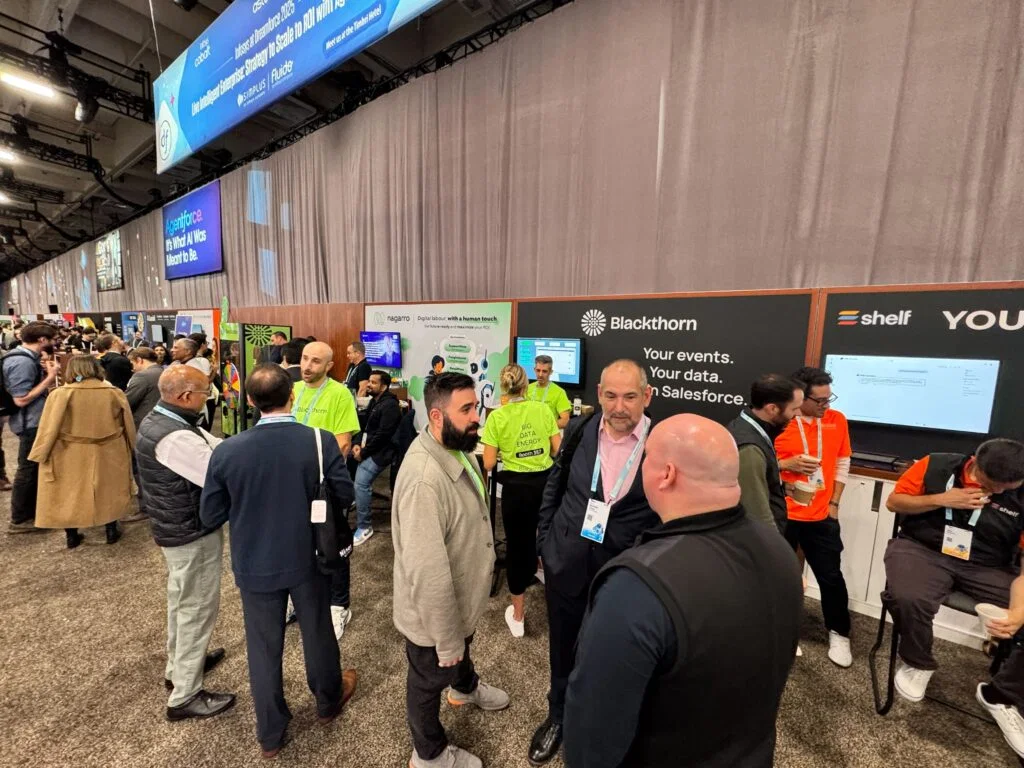
Graphics, AV, and finish control
Finish quality comes from readable graphics, confirmed dimensions, durable materials, clean power paths, sensible lighting, and enough review time to correct mistakes before the booth is being assembled. Lead Capture and Digital Engagement should be judged by how well those details survive real show conditions, not just by how polished the plan looks in isolation.
the Grand Concourse Expansion project. That is why the production plan should match the event setting instead of leaning on a one-size-fits-all booth formula.
Stakeholders, staffing, and floor behavior
Marketing, operations, sales, procurement, venue contacts, and field crews usually care about different parts of Lead Capture and Digital Engagement. The plan gets stronger when those needs are translated into decisions about footprint, staffing, storage, demo flow, meeting space, approvals, and who has authority on the floor.
A booth that expects demos, hospitality, lead capture, or scheduled meetings needs different staffing and circulation than one built for fast product visibility. Naming that behavior early keeps layout and support choices connected to the way the team will actually work inside the space.
Risk control before the floor gets expensive
The expensive problems are usually small decisions that were not owned early enough: unconfirmed utilities, late graphics, vague freight timing, missing paperwork, unclear labor assumptions, or a booth format that does not match the room. Lead Capture and Digital Engagement planning should expose those risks while they are still cheap to correct.
Show-site supervision is not a decorative add-on when the schedule is tight. It keeps the install sequence, finish quality, and field communication close enough that the project can absorb normal show-week pressure without turning every issue into a last-minute rescue.
What to decide next
The next step is to narrow the live project: venue or district, event dates, footprint, services already in scope, and the biggest constraint. With those details visible, the Orlando plan can move from broad interest to a realistic sequence for production, freight, labor, graphics, and show-site control.
That conversation also makes budgets more honest. It shows where reusable assets, rental options, added supervision, or a tighter vendor handoff can protect the outcome before the most expensive decisions are already in motion.
Orlando trade show market
Trade shows in Orlando move fast. Major venues book out months in advance, freight windows run tight, and the exhibitors who win their weeks are the ones who arrive with a plan already in hand.
The attendees vary by show — some weeks draw regional operators, others pull international buyers in for a single conference — but the floor mechanics stay consistent. Every booth needs graphics production, show services, labor calls, and a plan for the specific building it's landing in.
The Orange County Convention Center offers about 2.1 million square feet of exhibition space, two 92,000-square-foot general assembly areas, 74 meeting rooms, 6,227 parking spaces, and three covered loading docks, which sets the practical ceiling for a booth program working the market.
Where Orlando shows actually happen
The building matters more than almost anything else in a trade show plan. A few Orlando venues carry most of the calendar.
The right building depends on the show: a consumer expo wants open aisles and broad traffic flow; a corporate conference wants controlled breakout space; a brand activation wants a venue that can carry scenic and production without fighting the architecture.
Orange County Convention Center: known as "The Center of Hospitality", the Orange County Convention Center (OCCC) is the second largest convention facility in North America.
Hyatt Regency Orlando. We are the only property that has three walkway bridges directly connected to and across from the Orange County Convention Center.
The advantage of a local Orlando team
Our team keeps the work local. Design, build, and install share the same team and the same playbook, which is how quality survives across a show week.
Working with a Orlando-based shop matters most when something goes wrong on-site. Solutions live within driving distance instead of on another coast.
Consistency across show dates is the other reason to hire local. The same crew that built the booth runs the install, knows the pack-out, and catches the small things — a missing hardware pack, a graphic edge that needs reseating, a storage crate routed to the wrong bay — without needing the client team to intervene.
Who handles what during the Orlando install window
Most of what goes wrong on a Orlando install traces back to assumptions about labor. Staying inside the venue's published rules for the specific show prevents it.
On most Orlando shows, the labor plan takes one call with the venue's exhibitor services desk, one review of the current manual, and one email to the general contractor. Skipping any of those three is usually where problems start.
For Orlando conference hotels and special-event venues, no public venue-wide union mandate was verified from the current public sections reviewed. Labor rules are confirmed against each event's service manual, house AV policy, and exhibitor kit before confirming outside labor access.
The main Orlando event areas
Disney / Bonnet Creek / Lake Buena Vista covers Lake Buena Vista, Bonnet Creek, Celebration, Kissimmee. Major hotel-conference and brand-activation cluster with large resort inventory, ballroom product, and multi-day conference traffic.
North / Northeast Orlando — Lake Nona, Sanford, Lake Mary — is a different environment. Useful for airport-adjacent meetings, regional association events, and overflow location targeting beyond the core tourist corridor.
What's included in the project scope
Lead-capture-and-digital-engagement projects typically include design work, fabrication or rental sourcing, graphics production, show-service paperwork, freight, install, show-hours coverage, and strike.
What shows up in most budgets: structure, graphics, AV, show-service orders through the venue, labor, freight, supervision days, and closeout. Individual projects layer or remove items based on scope.
Good execution comes from keeping the team small and the handoffs short. Every extra vendor in the chain adds a communication layer and a place where details get lost.
Multi-show programs add asset management: storage, refurbishment, graphic swaps, and scheduled re-kitting so the booth rolls cleanly from Orlando to the next city on the calendar.
Scope boundary is as important as scope inclusion. Show organizer fees, client-side staff costs, and any tools the client already owns are handled outside the engagement. Defining that boundary up front prevents billing surprises later.
From first call to strike
Every engagement begins the same way. The venue, the show dates, the footprint, and the target outcome go on the table first. From those four inputs, a real plan can be built.
After the brief, the work turns to the building itself. Dock windows, utility orders, rigging approvals, and labor calls are all confirmed in writing before anything goes to fabrication.
Production covers fabrication, graphics, AV spec, rentals, and crew chief assignment. It is the longest phase of most projects and the one where timelines are either protected or lost.
Install days are owned by a single show floor lead. That person carries the plan, works the punch list in real time, and reports up once a day with real status.
Throughout show hours, the show floor lead stays present. Tech breaks, sponsor changes, venue requests — all handled without pulling the client team off the floor.
Strike and closeout happen the same day. Storage labels, outbound manifests, vendor performance notes, and a written debrief go out within 24 hours of doors closing.
Budget and timeline
Every project has the same cost drivers. The number depends on scope, and scope depends on a handful of specific variables.
Six variables drive the cost: custom versus rental, booth footprint and complexity, venue-specific labor and rigging fees, graphics scope and substrate, freight distance and timing, and the number of on-site supervision days.
Lead time drives everything. Custom: 16 to 20 weeks. Rental: 8 to 12. Under 4 weeks is possible but narrows choices and raises cost.
How project performance gets measured
The measure of a good engagement is simple: on-time install, no venue callouts, clean show hours, and a closeout that makes the next event easier to book.
Most programs in Orlando are evaluated on lead-capture volume, meetings booked on the floor, and qualified-pipeline attribution after the show. The booth is a means to those numbers — it is not the number itself.
A week after the show, the booth's actual floor performance is already clearer than any pre-show projection. We document those observations alongside the technical closeout so the next cycle inherits real signal, not nostalgia.
lead-capture-and-digital-engagement planning questions
Q: Do you work at Orlando World Center Marriott?
Yes. Providing the ideal location for any group occasion, the Orlando World Center Marriott’s unparalleled offerings feature more than 500,000 square-feet of sophisticated and flexible event space , nearly all on one level. Our resort features an on-property 18-hole championship golf course, 576,000-gallon tropical pool complex, 9 restaurants and lounges and 2,010 newly redesigned guest rooms and suites. ALL NEW WATERPARK - RIVER FALLS, NOW OPEN featuring 3 new multi-rider waterslides and a 575ft. lazy river. From our recently renovated Grand Ballroom to our new event convention space Magnolia now open we continue to enhance the property to create new unique experiences and venues including our nightly poolside Laser Light Show , which can be customized for group events. With our award-winning service and all the latest technology, like Marriott’s Red Coat Direct App, we’ll make it easy for you to host an out-of-this-world event that is sure to impress your attendees. Projects at that building are planned against its specific floor rules.
Q: How does labor work in Orlando?
It runs venue by venue. For Orlando conference hotels and special-event venues, no public venue-wide union mandate was verified from the current public sections reviewed. Labor rules are confirmed against each event's service manual, house AV policy, and exhibitor kit before confirming outside labor access. Other Orlando venues have their own published rules, and the plan matches the specific building.
Q: How much lead time is ideal?
Custom builds run best with 16 to 20 weeks of lead time. Rentals take 8 to 12 weeks. Work inside 4 weeks is possible but raises costs and narrows the options.
Q: What information kicks off a project?
The show, the venue, the booth number, the dates, and a target budget range. From those, an initial scope and a realistic cost come back within a few days.
Q: Who runs the booth on-site?
One named show-site lead runs the install, the show hours, and the strike. That person carries the floor plan and the punch list from crates to doors and reports up once a day.
Q: Can the booth travel to the next city on our calendar?
Yes — builds are designed for modular reuse unless single-use scenic is specifically required. Same structure, swappable graphics, standard crates. Orlando programs that roll to another city on the same calendar get handled end to end.
Q: What happens if something breaks during show hours?
The show floor lead handles it. Minor repairs happen in place; anything larger gets sourced from the local fabricators or rerouted through the venue's service desk.